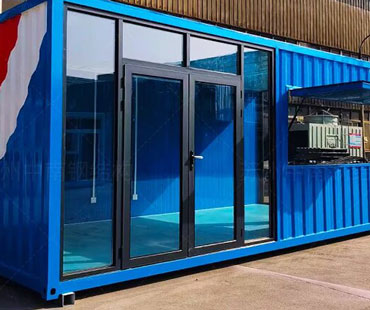
As housing demands continue to evolve, people are looking for solutions that are more flexible, affordable, efficient, and environmentally responsible. Traditional construction can often require significant time, labor, and financial investment. In comparison, container houses have emerged as an innovative alternative that combines modern design with practical construction methods.
Originally developed from the concept of converting shipping containers into usable spaces, modern container houses have evolved far beyond simple container conversions. Today, they can be designed as comfortable homes, offices, guest rooms, temporary accommodation, commercial spaces, worker housing, and even complete modular buildings.
With their flexible structure, fast installation, and customizable design, container houses are becoming an increasingly attractive option for residential and commercial applications.
What Is a Container House?
A container house is a prefabricated or modular building that uses a steel container structure as its main framework. Depending on the design, the structure can be modified with insulation, windows, doors, electrical systems, plumbing, flooring, ceilings, and interior finishes to create a fully functional living or working environment.
Unlike traditional houses, which are usually constructed piece by piece on site, many container houses are manufactured in a controlled factory environment. A large part of the construction process can therefore be completed before the building arrives at its final location.
This approach can help reduce on-site construction work while improving production efficiency and consistency.
Modern container houses are also highly customizable. Different layouts, dimensions, colors, materials, and interior configurations can be selected according to specific requirements. Whether the goal is to create a compact single-room unit or a larger modular residence, container-based construction offers considerable design flexibility.
Flexible Design for Different Applications
One of the most important advantages of container houses is their versatility. They can be used in many different situations and adapted to different environments.
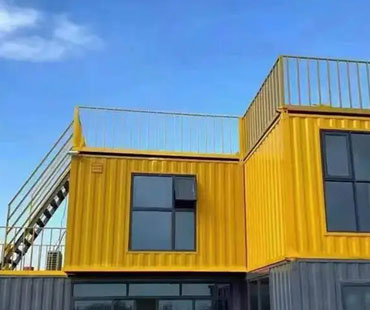
For residential use, container houses can provide bedrooms, kitchens, bathrooms, living rooms, and storage areas. Multiple units can also be connected or stacked to create larger buildings with multiple rooms.
For commercial applications, container structures can be transformed into offices, retail stores, cafés, restaurants, reception areas, and temporary business facilities.
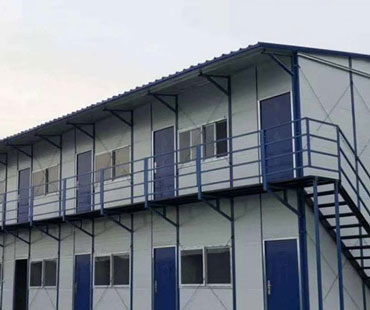
In construction and industrial projects, container houses are often suitable for worker accommodation, site offices, security rooms, and project facilities. Their modular nature makes them particularly useful in locations where conventional construction may be difficult or time-consuming.
Container houses can also serve as temporary accommodation following natural disasters or during large-scale infrastructure projects. Because they can be manufactured and installed relatively quickly, they provide an adaptable solution when conventional buildings are not immediately available.
Affordable Construction Without Sacrificing Comfort
Cost is one of the major factors driving interest in container houses. Traditional construction can involve extensive expenses related to materials, labor, transportation, and on-site construction time.
A prefabricated container house can simplify many of these processes. Standardized components and factory production can help improve material utilization and reduce certain construction-related costs.
However, affordability does not necessarily mean sacrificing comfort.
A well-designed container house can include thermal insulation, sound insulation, modern flooring, efficient lighting, comfortable furniture, air conditioning, ventilation, and complete bathroom and kitchen facilities. With appropriate design and materials, a container house can provide a comfortable environment for everyday living.
The final cost depends on factors such as size, materials, insulation requirements, interior finishes, transportation distance, installation conditions, and customization. Therefore, customers can often select different configurations according to their budget and intended use.
Faster Installation and Efficient Construction
Time is another important advantage of modular container construction.
Traditional buildings can require lengthy preparation and construction periods, especially when projects involve complicated structures or challenging site conditions. Factory-produced container houses can reduce the amount of work that needs to be completed at the installation site.
While the exact installation time varies depending on the project, a significant portion of the manufacturing process can be completed in advance. Once the modules arrive at the destination, they can be assembled, connected, and equipped with the necessary utilities.
This can be especially valuable for temporary housing, construction camps, remote accommodation, emergency facilities, and commercial projects that need to become operational quickly.
By moving more construction activities from the building site into a controlled factory environment, manufacturers can also improve quality control and reduce the impact of weather conditions on certain stages of production.
Durable Steel Structures
Container houses generally use steel as a key structural material. Steel provides strength and durability while allowing manufacturers to create modular structures that can be transported and assembled efficiently.
A high-quality container house should be designed according to its intended application and local environmental conditions. Factors such as wind, snow, humidity, temperature, transportation requirements, and foundation conditions may all need to be considered.
Proper surface treatment and corrosion protection are also important for extending the service life of steel structures, particularly when container houses are installed in coastal or humid environments.
The durability of a container house therefore depends not only on the steel frame itself but also on the quality of manufacturing, insulation, waterproofing, corrosion protection, installation, and regular maintenance.
Energy Efficiency and Sustainable Living
Sustainability is becoming an increasingly important consideration in modern construction. Container houses can contribute to more efficient building practices through modular production, material optimization, and potentially reduced construction waste.
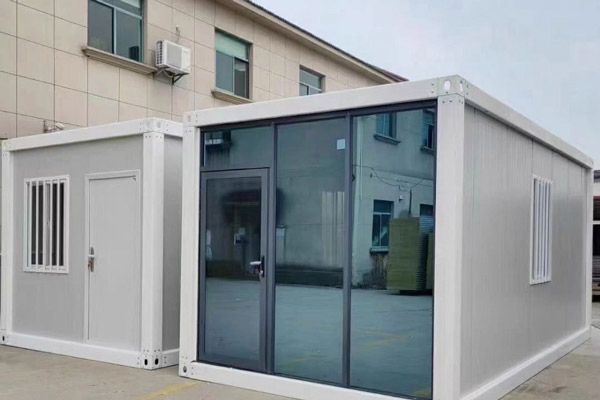
Many modern container homes can also be equipped with energy-efficient doors and windows, insulation systems, LED lighting, efficient heating and cooling equipment, and solar energy systems.
Depending on the project design, renewable energy technologies such as solar panels can be integrated into the building. Rainwater collection and energy-saving systems may also be considered for certain applications.
Another advantage of modular construction is that buildings can potentially be relocated or reconfigured according to changing needs. This flexibility can help extend the useful life of the structure and reduce the need to construct completely new buildings when requirements change.
Customization for Modern Lifestyles
Although container houses are based on standardized structural concepts, modern manufacturing allows them to be highly customized.
Customers can choose different floor plans, exterior finishes, windows, doors, colors, insulation materials, electrical configurations, kitchen layouts, bathroom facilities, and interior decoration options.
For residential projects, designers can focus on natural lighting, ventilation, storage, and efficient use of space. For offices, the layout can be designed around workstations, meeting rooms, storage, and communication facilities.
For hospitality projects, multiple container units can be combined to create guest rooms, reception buildings, restaurants, or small resorts.
This ability to customize allows container houses to move beyond the idea of a basic temporary structure. With thoughtful architectural design, they can become attractive, practical, and comfortable modern spaces.
Easy Transportation and Relocation
Transportation is another key feature of container-based buildings.
Because the structures are designed around modular dimensions, they can often be transported using standard logistics methods, although transportation requirements depend on the specific design and local regulations.
This makes container houses suitable for projects where buildings may need to be moved in the future.
For example, a construction company may use modular units as temporary offices or accommodation during a project and relocate them when the project is completed. Businesses may also use portable container buildings for seasonal operations, temporary retail locations, or expanding workspace.
This mobility gives container houses an advantage over many conventional permanent structures.
Choosing the Right Container House
When purchasing a container house, buyers should consider more than appearance and price.
The structural design, insulation performance, waterproofing, electrical system, ventilation, fire safety, material quality, manufacturing standards, and installation method are all important factors.
It is also essential to consider the local climate and regulations. A container house designed for a warm climate may require a different insulation system from one intended for a cold region. Areas with heavy snowfall or strong winds may require additional structural considerations.
Working with an experienced manufacturer can help ensure that the design is appropriate for the intended application and installation environment.
The Future of Container Housing
Container houses represent more than a temporary housing trend. They reflect a broader shift toward modular, flexible, and efficient construction.
As technology, materials, and architectural design continue to improve, container-based buildings are likely to become increasingly sophisticated. Smart home systems, renewable energy, improved insulation, modern interior design, and customized modular structures can further expand their potential applications.
For homeowners, developers, businesses, and project managers, container houses offer an alternative way to think about construction: build efficiently, use space intelligently, and adapt the structure to changing needs.
Container houses provide a practical combination of flexibility, affordability, efficient construction, and modern design. From residential homes and holiday accommodation to offices, commercial buildings, and project facilities, they can meet a wide range of needs.
Their real value lies not simply in using a container as a building structure, but in applying modern modular construction technology to create spaces that are durable, comfortable, customizable, and adaptable.
As the demand for efficient and flexible buildings continues to grow, container houses are positioned to play an increasingly important role in the future of modern construction. For those seeking a smarter alternative to traditional building methods, a well-designed container house can be both a practical investment and a modern way of living.